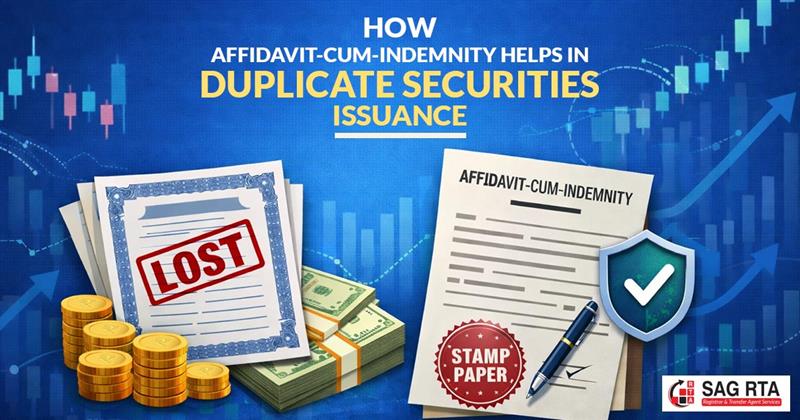
Investors commonly encounter issues like loss, theft, or damage of physical securities, such as share certificates. In these situations, companies and Registrar & Transfer Agents (RTAs) permit the issuance of duplicate securities, provided the investor meets specific procedural and legal requirements. One of the most important documents in this process is the Affidavit and Indemnity. This document serves as a legal declaration and protection for the issuing company.
Duplicate Securities
Duplicate securities are said to be the replacement certificates that have been issued when the original physical securities are lost, misplaced, destroyed, or stolen. As physical certificates represent ownership, the companies need to ensure that duplicate issuance does not result in fraud, multiple claims, or legal disputes. Hence, regulatory authorities obligate a structured process kept by legal documentation.
Role of Affidavit-cum-Indemnity
The Affidavit-cum-Indemnity is an integrated legal document that performs two functions:
- Affidavit: The investor declares, under oath, the facts of the loss or destruction of the original securities. This declaration verifies that the certificates are genuinely lost and have not been transferred, pledged, or misused.
- Indemnity: The investor consents to indemnify and keep the company, RTA, and related authorities harmless against any future claims, losses, or legal consequences deriving from the issuance of duplicate securities.
This dual-purpose document serves as a legal assurance and risk-mitigation tool for companies and RTAs.
When is an Affidavit-cum-Indemnity Required?
In the below-mentioned cases, an Affidavit-cum-Indemnity is needed-
- Loss or misplacement of physical share certificates.
- Theft of securities.
- Certificates destroyed due to fire, flood, or natural disasters.
- Damage beyond recognition.
SEBI-regulated entities and RTAs comply with these prerequisites to ensure compliance and transparency.
Contents of the Affidavit-cum-Indemnity Format
A standard Affidavit-cum-Indemnity format for issuance of duplicate securities comprises:
- Name(s) of the security holder(s).
- Folio number and certificate number(s).
- Distinctive numbers and number of shares.
- Reason for loss or non-availability of original certificates.
- Declaration that the securities are not sold, pledged, or transferred.
- An indemnity clause protects the company and RTA from future claims.
- Date, place, and signature of the applicant(s).
- Attestation by a Notary Public or Magistrate.
To avoid rejection or delays accuracy and completeness of these details are important.
Significance of Companies and RTAs
From the viewpoint of a company, issuing duplicate securities involves legal and financial risk. The Affidavit-cum-Indemnity ensures:
- Legal protection against double claims.
- Compliance with SEBI and corporate regulations.
- Proper documentation for audit and record-keeping.
For RTA, the same document allows seamless processing while keeping investor trust and operational integrity.
Best Practices for Investors
Investors need to:
- Deliver correct and consistent information.
- Follow the specified format issued by the company or RTA.
- Ensure proper notarization.
- Retain copies of all submitted documents for future reference.
Timely and precise submission lessens processing time.
Closure
The Affidavit-cum-Indemnity format for issuance of duplicate securities secures a crucial role in safeguarding the interests of both investors and issuing entities. It confirms clarity, legal compliance, and risk management throughout the duplicate issuance process. The investors, by complying with the mentioned format and norms, can get the duplicate securities efficiently, while companies and RTAs remain safeguarded against potential disputes.